Transform your Long Island home with our custom sunrooms, liferooms, pergolas, and more! Quality Designs That Improve Your Space And Lifestyle.
Contact Info
Transform your Long Island home with our custom sunrooms, liferooms, pergolas, and more! Quality Designs That Improve Your Space And Lifestyle.
Contact Info
Houston's outdoor living season is longer than most people realize. Here's what a 3 season porch actually is — and whether it makes sense for your Harris County home.
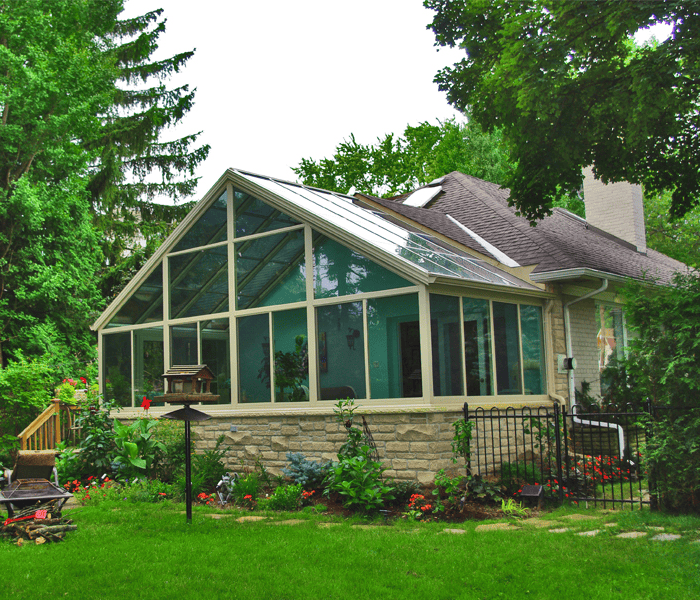
You’ve got a backyard. Maybe a deck. And from about June through September, you watch it from inside because stepping out feels like walking into a sauna — with mosquitoes. Harris County homeowners know this frustration well. The good news is there’s a middle ground between a bare patio and a full room addition, and it costs a lot less than you might think. A 3 season porch gives you a protected, comfortable outdoor space for the better part of the year — and in Harris County’s climate, that’s a longer stretch than the name suggests. Here’s everything you need to know before making a decision.
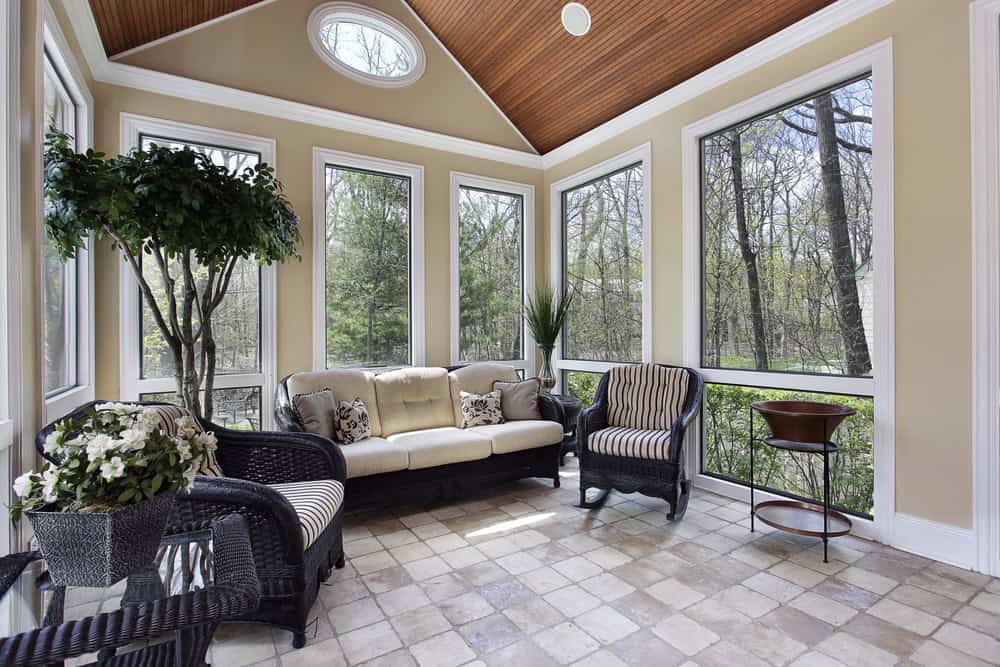
A 3 season porch is an enclosed outdoor room with walls, windows, and a roof — but no connection to your home’s HVAC system and little to no insulation. It’s designed to be comfortable in mild weather, protected from rain and insects, and open enough to let in natural airflow when the temperature cooperates.
It sits somewhere between a screened porch and a full sunroom. A screened porch uses only mesh panels — no glass, no wind or rain protection beyond basic shade. A 3 season porch steps that up with glass or vinyl windows that block the elements while still keeping the space feeling open and airy. A four season room goes further still, with insulated walls, thermally engineered framing, and a full HVAC connection so you can use it comfortably in July or January regardless of what’s happening outside.
For many Harris County homeowners, the 3 season porch lands in exactly the right spot — more protection than a screen room, less construction complexity than a full room addition, and a price tag that reflects both.
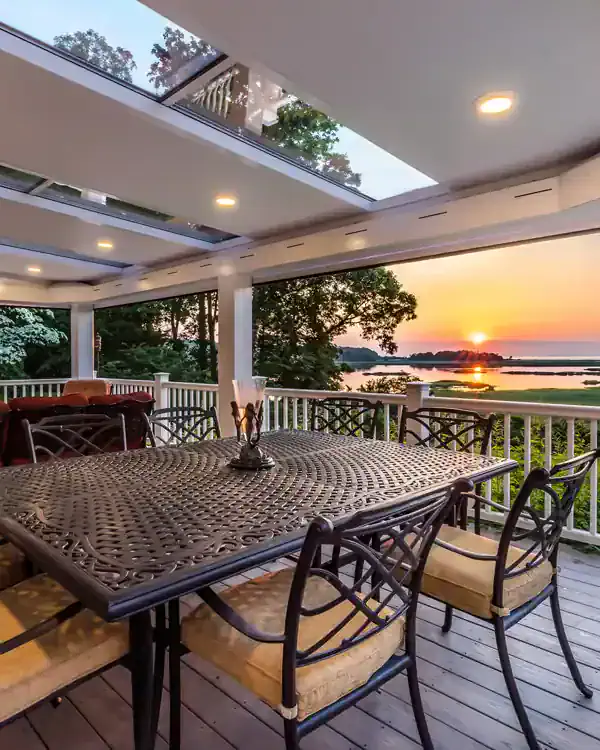
Here’s where Harris County changes the math. When most people hear “3 season porch,” they picture a space that’s usable in spring, summer, and fall — and closed off through a cold northern winter. That’s the reality in Chicago or Minneapolis. In Harris County, the picture looks very different.
Houston’s winters are genuinely mild. December and January average highs in the low 60s. Cold snaps happen, but they rarely stick around for more than a few days. What that means practically is that a well-built 3 season porch in this area is comfortable from roughly October through May — that’s seven to nine months of usable outdoor living, not three. The name undersells what you’re actually getting here.
The real limitation in Harris County isn’t winter. It’s summer. From June through September, afternoon heat indices regularly hit 105°F to 110°F, and without climate control, any uninsulated space is going to feel it. A 3 season porch won’t solve that problem on its own. But here’s the honest take: most Harris County homeowners don’t want to sit outside at 2 p.m. in August regardless of how the space is built. The shoulder seasons — those long stretches of genuinely beautiful weather in spring and fall — are when outdoor living actually happens. A 3 season porch captures nearly all of that.
The mosquito problem is the other piece of this. Harris County’s mosquito season doesn’t really end. It slows down in the coldest weeks of winter and picks right back up. A properly enclosed 3 season porch with a quality screen system eliminates that issue entirely, which for a lot of homeowners is reason enough on its own.
What makes a screen system perform well in Harris County specifically is build quality and material selection. Aluminum framing holds up in humidity without warping or corroding the way wood does. Screen panels should be tensioned correctly so they stay flat and don’t sag over time. Glass or vinyl windows need to seal cleanly so rain — and Harris County gets about 50 inches of it annually — doesn’t find its way in. These aren’t minor details. They’re the difference between a porch that lasts and one that becomes a problem within a few years.
This is the question most Harris County homeowners end up asking once they understand what a 3 season porch actually is. The short answer: it depends on how you plan to use the space and what your budget allows.
A 3 season porch costs significantly less than a four season room. The national average for a 3 season room runs around $25,000, while a full sunroom or four season room typically starts closer to $45,000 and can go well beyond that depending on size and specifications. The construction is also less involved — no insulated wall systems, no HVAC integration, no foundation requirements equivalent to a full room addition. That translates to a faster build and less disruption to your home during the process.
A four season room, on the other hand, is built to the same standard as a room addition. Insulated walls, thermally engineered framing, a connection to your home’s heating and cooling system — it functions as true interior living space year-round. In Harris County’s context, that means you can use it comfortably in July, which a 3 season porch cannot reliably deliver.
The honest version of this comparison: if you’re primarily chasing those beautiful October through April months in Harris County and want to stop surrendering your outdoor space to mosquitoes and rain, a 3 season porch does that job well and costs less to get there. If you want the space to function as a true year-round room — a home office, a formal sitting room, something you’ll use in the middle of August — a four season room is the smarter long-term investment. Neither is the wrong answer. They solve different problems.
One thing worth knowing: starting with a 3 season porch doesn’t lock you in permanently. The upgrade path to a four season room exists, and it’s worth understanding before you build so you can make decisions now that don’t complicate a potential upgrade later.
Want live answers?
Connect with a Four Seasons Sunrooms Houston expert for fast, friendly support.
A lot of Harris County homeowners already have the starting point they need. If you’ve got an existing deck or covered patio that’s sitting underused, enclosing it into a 3 season porch is often faster and more cost-effective than building from scratch. You’re not starting from nothing — you’re building on what’s already there.
That said, “I have a deck” doesn’t automatically mean “my deck is ready to enclose.” Adding walls, windows, and a roof changes the structural load on that existing structure in ways that need to be assessed before any work begins. This is a step that matters, and it’s one that we take seriously before a single panel goes up.
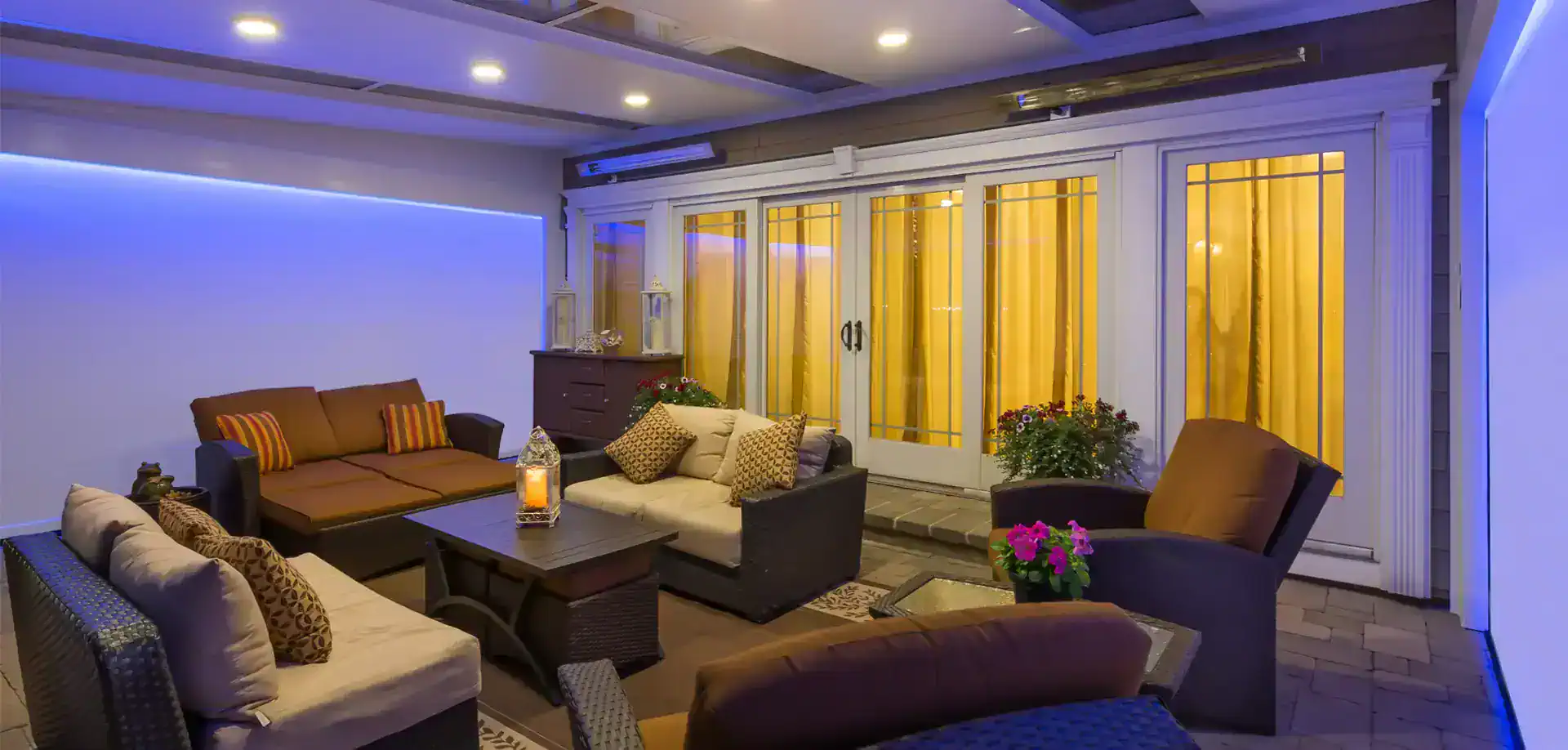
The first thing that happens before any enclosure work begins is a structural assessment of the existing deck. The framing, the ledger board connection to the house, the post footings — all of it gets evaluated to determine whether the current structure can carry the added load of walls and a roof. In some cases, upgrades are needed. In others, the deck is already built to handle it. Either way, you need to know before you build, not after.
Harris County’s soil adds a layer of complexity here. The clay-heavy soil common throughout the region expands and contracts significantly with moisture changes, which affects how foundations and footings behave over time. A contractor who knows this market will account for it in the structural design. One who doesn’t may build you something that looks fine on day one and develops problems within a few years.
Wind load is the other consideration specific to Harris County. The area sits in a hurricane exposure zone, and any enclosed structure needs to be engineered to handle Gulf Coast wind events. This isn’t just about surviving a major storm — it’s about the structure performing correctly through years of tropical weather, heavy rain, and the kind of sustained wind that comes with Gulf Coast systems. Proper tie-downs, anchored connections, and code-compliant framing aren’t optional here. They’re what separates a porch that holds up from one that becomes a liability.
Permits are required for this type of work in Houston and throughout unincorporated Harris County, full stop. A building permit is required for all porch construction regardless of size or cost, and if structural upgrades to the existing deck are involved, those need to be permitted and inspected as well. If a contractor tells you a permit isn’t necessary, that’s a red flag worth taking seriously. Code violations create real problems — with insurance, with resale, and occasionally with the structure’s safety.
For homeowners in HOA communities — and there are many throughout Harris County, from Cinco Ranch and Bridgeland in Katy to master-planned neighborhoods in Cypress, Humble, and Kingwood — HOA approval is a separate step that needs to happen before construction begins. The design, materials, and roofline integration all factor into HOA review, and getting that approval process right from the start saves significant headaches later.
Cost is usually the first real question, and the honest answer is that it varies — but there are useful benchmarks. A 3 season room nationally averages around $25,000, with a full range of roughly $8,000 on the low end to $70,000 or more for larger, more complex projects. Where your project lands within that range depends on the size of the space, the materials specified, whether structural work on the existing deck is needed, and the complexity of integrating the new enclosure with your home’s existing roofline.
For context, a basic screened porch built on an existing deck starts around $2,800 and can run to $11,000 for a new structure. A full four season room or sunroom addition typically starts around $45,000. A 3 season porch sits meaningfully between those two — more protection and durability than a screen room, less cost and construction complexity than a full climate-controlled room.
The other number worth knowing is what a well-built 3 season room can do for your home’s value. Research consistently shows that this type of addition can increase a home’s worth by up to 10%. That’s not a guarantee, and it depends on quality of construction and how the market values livable space in your specific Harris County neighborhood — but it does change the way you think about the investment. You’re not just spending money on a porch. You’re adding usable square footage that the market recognizes.
What affects the final number most significantly is the quality of the materials and the experience of the contractor. Aluminum framing, quality screen systems, and properly specified glass all cost more upfront and perform dramatically better over time — especially in a climate as demanding as Harris County’s. The cheapest quote is rarely the best value when you’re building something intended to handle the region’s annual rainfall, year-round humidity, and the occasional tropical storm.
Getting an accurate number for your specific home and deck configuration requires a real conversation and a site visit. Ballpark estimates have their place, but the details of your existing structure, your HOA requirements, and the design you’re after all affect the final scope in ways that a general range can’t fully capture.
For most Harris County homeowners, the answer is yes — with one condition: you go in with clear expectations about what the space will and won’t do. A 3 season porch won’t replace your air conditioning in August. But it will give you a protected, comfortable outdoor room for the better part of the year, eliminate the mosquito problem that makes so many Harris County backyards unusable, and add real value to your home in the process.
Harris County’s outdoor living season is longer than most people give it credit for. With mild winters and genuinely beautiful shoulder seasons, a well-built 3 season porch is a practical, cost-effective way to actually use the outdoor space you already have.
If you’re weighing your options — 3 season porch, four season room, screen room, or something else entirely — we’re a good place to start that conversation. We’ve been building these spaces since 1975, we pull every permit, and we design each project to match your home and Harris County’s climate — not a generic template built for somewhere else.
Summary:
Article details:
Share: