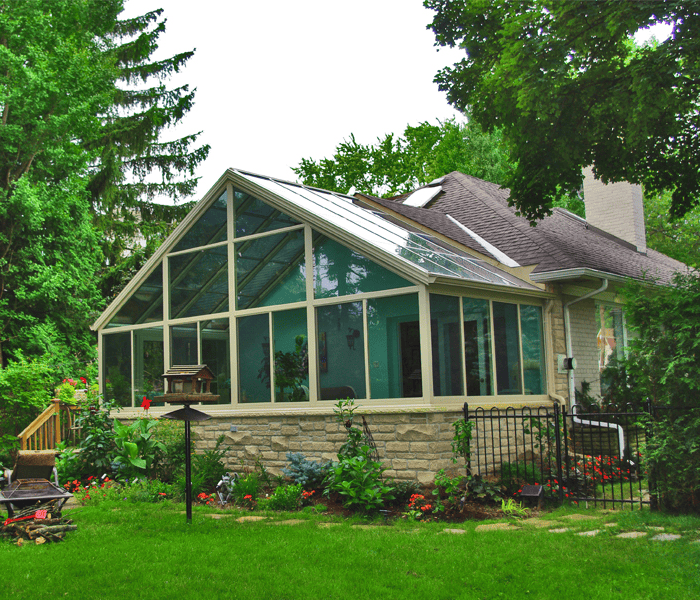
Transform your Long Island home with our custom sunrooms, liferooms, pergolas, and more! Quality Designs That Improve Your Space And Lifestyle.
Contact Info
Transform your Long Island home with our custom sunrooms, liferooms, pergolas, and more! Quality Designs That Improve Your Space And Lifestyle.
Contact Info
Houston's climate is brutal on outdoor spaces. Here's how to find a contractor who builds four season rooms that hold up year-round — and what separates them from the rest.
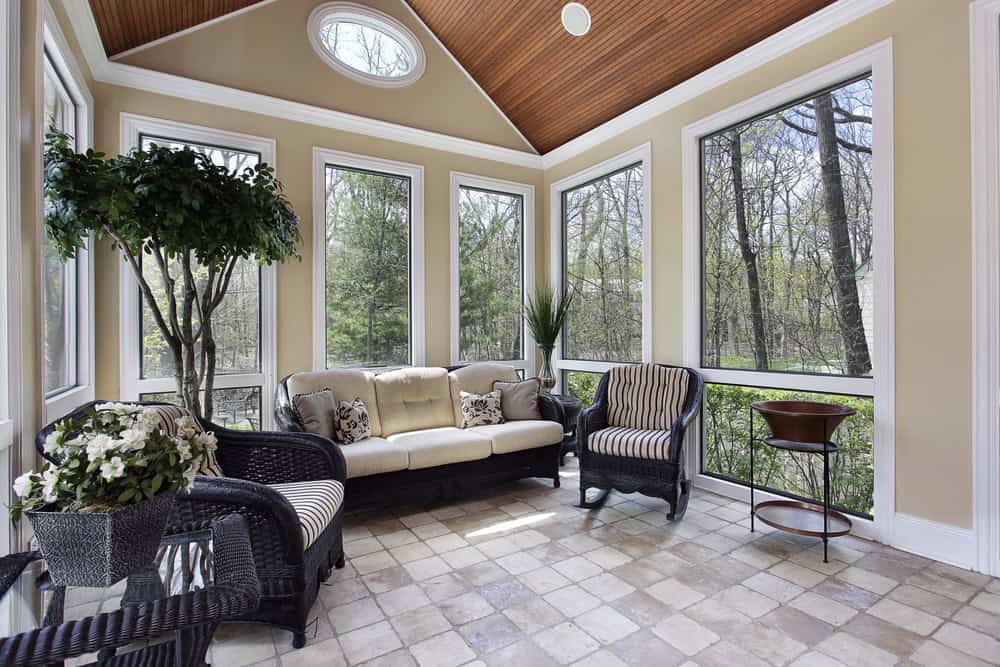
If you’ve spent another Houston summer watching your backyard through a window, you’re not alone. Most Harris County homeowners have a patio, a deck, or a covered outdoor space that gets used maybe five months out of the year — if that. The heat alone makes it unbearable by May. Add the humidity, the mosquitoes, and the afternoon storms rolling in off the Gulf, and that beautiful outdoor space becomes more of an expensive view than a place you actually live in.
A four season room changes that. But only if it’s built right — and only if you hire a contractor who actually knows what they’re doing in this climate. Here’s what you need to know before you start making calls.
A four season room isn’t a patio cover with windows. It’s a fully insulated, climate-controlled enclosure that integrates with your home’s existing HVAC system — built to code, permitted, and engineered to handle Houston’s weather year-round. That’s a fundamentally different project than what most general contractors are set up to handle.
The difference shows up in the details: the glass technology, the insulation in the roof and walls, the structural engineering required for an attached addition, the electrical work for HVAC integration, and the permits that have to be pulled before a single panel goes up. A general remodeler who does sunrooms on the side may not have the specialized knowledge to get all of that right. In Harris County, where building codes were updated in 2024 with stricter energy efficiency and climate resilience standards, getting it wrong has real consequences.

Houston’s UV index averages 10.3 in June — classified as Very High to Extreme by NOAA. Record temperatures have hit 109°F. And the humidity doesn’t care what the thermometer says; it makes every degree feel worse. In this environment, a sunroom built with standard glass becomes a greenhouse. Not a comfortable living space — a room you avoid.
The glass technology matters more here than almost anywhere else in the country. We use CONSERVAGLASS™ NXT, a patented glazing system engineered to block UV rays and reduce heat transfer while still letting in natural light. It’s not a marketing upgrade — it’s the reason our rooms stay comfortable in July when the rest of your house is fighting the same battle. Standard insulated glass won’t perform the same way, and most general contractors won’t know the difference until you’re already living with the result.
Beyond the glass, a properly built four season room needs insulation in the roof, walls, and floor — not just the panels. It needs HVAC integration that’s engineered, not improvised. And it needs to be structurally attached to your home in a way that meets Harris County’s current building code requirements, including any floodplain regulations that apply to your specific property. If you’re in Meyerland, Kingwood, or parts of Katy near the floodplain, that adds another layer of permitting complexity that we handle routinely — and a general builder may not have encountered before.
The point isn’t to make this sound complicated. It’s to help you understand why the contractor you choose matters as much as the product you’re buying. A four season room built by someone who does this every day looks different, performs differently, and lasts longer than one built by someone who’s figuring it out on your dime.
Houston is the largest city in the United States without traditional zoning. That doesn’t mean you can build whatever you want — it means the rules are governed by deed restrictions and HOA covenants instead of city zoning ordinances. In heavily HOA-governed communities like Cypress, Atascocita, and Katy, getting approval for a sunroom addition is a real process that requires documentation, architectural review, and sometimes back-and-forth with the association before a single permit gets filed.
A contractor who leaves that process to you is a problem. Not because it’s impossible to navigate, but because it adds weeks of friction to a project you’ve already decided you want — and because mistakes in the HOA approval process can create delays, required modifications, or outright denials that are expensive to undo.
We handle HOA coordination as part of every project. We also pull all building permits through the Houston Permitting Center, manage structural engineering sign-off, and coordinate every inspection from start to final approval. You don’t touch the paperwork. That’s how a professional contractor operates.
Unpermitted work in Harris County carries real consequences: stop-work orders, double penalty fees, potential requirements to tear out completed work, and complications when you go to sell the home. Insurance claims on unpermitted structures can also be denied. If a contractor ever suggests you pull your own permit, or tells you the project doesn’t need one, that’s a red flag worth taking seriously. A licensed, insured contractor who builds to code doesn’t need to cut those corners.
Want live answers?
Connect with a Four Seasons Sunrooms Houston expert for fast, friendly support.
Not everyone needs a four season room, and it’s worth being honest about that. We specialize in lighter enclosures too — screen rooms, seasonal glass rooms, and patio enclosures that aren’t designed for year-round climate control. The construction is less complex, the cost is lower, and for the right homeowner in the right situation, it’s a perfectly reasonable choice.
The key question for Harris County homeowners is what “three season” actually means in Houston’s climate — because the answer is different here than it is almost anywhere else.

In most of the country, a three season room earns its name because it’s comfortable from roughly March through November — about eight or nine months of usable space. That’s a solid value proposition. In Houston, the math is different.
Houston’s heat becomes genuinely oppressive by May and doesn’t let up until late October. A three season porch with no HVAC integration and standard glass panels will be uncomfortable — sometimes unbearably so — from late spring through early fall. That’s five or six months where the room sits unused, which is essentially the same problem you had with your open patio, just with walls around it.
That said, three season room builders serve a real purpose for Harris County homeowners who primarily want spring and fall use, who have a budget that makes a four season room impractical, or who already have an adjacent climate-controlled space nearby and just want to extend their comfortable footprint during the pleasant months. If you’re in a neighborhood like Spring or Tomball and you mostly want a screened-in space for weekend mornings from October through April, a three season enclosure might be exactly right.
The honest version of this conversation is: know what you’re buying. A three season porch contractor will build you a quality seasonal enclosure. We won’t engineer it for Houston summers, because it’s not designed for that. If year-round use is the goal — if you want to sit in that room in August without sweating — you need a contractor who specializes in four season construction. The two products are not interchangeable, and the price difference reflects a real difference in what you’re getting.
The simplest way to frame the decision is this: how many months of the year do you want to use the space, and what’s your honest budget?
A three season patio enclosure is a screened or lightly glazed structure with no insulation to the same standard as a conditioned room and no HVAC integration. It keeps bugs out, provides shade, and makes mild-weather days more comfortable. In Harris County, it’s realistically a five-to-six-month room. Construction is faster, cost is lower, and the contractor requirements are less specialized. If that matches your goals, it’s a legitimate option.
A four season room is a fully conditioned space — insulated walls, insulated roof, HVAC integration, high-performance glass, built to the same code standards as any other room addition in your home. It’s usable in July. It’s usable in January. It adds livable square footage that shows up on an appraisal. Nationally, sunroom additions recoup roughly 49 to 55 percent of project cost at resale, and in a market like Harris County — where median home prices sit around $315,000 and values have appreciated significantly in recent years — adding a well-built, climate-controlled room addition is a defensible investment, not just a lifestyle upgrade.
The cost difference is real. A three season enclosure will come in lower than a four season room, which in the Houston market typically runs between $21,000 and $63,000 depending on size, materials, and complexity. But if you build the cheaper option and end up with a room you can’t use for half the year, you haven’t actually solved the problem. That’s the conversation worth having before you commit to either one.
We build both. And we’ll tell you honestly which one makes sense for your home, your budget, and how you actually plan to use the space — because a room you use every day is worth more than a room that looked good in a quote.
The short version: hire someone who pulls permits, carries a license and insurance, understands Houston’s specific climate challenges, and will tell you the truth about what you need — even if it’s not the most expensive option.
Ask any contractor you’re considering whether they handle permits and HOA coordination in-house. Ask what glass technology they use and why it matters in Houston’s heat. Ask for a written satisfaction guarantee and proof of licensing. If they hesitate on any of those, keep looking.
We’ve been building sunrooms since 1975 — nearly 50 years — and we’ve seen what Houston summers do to rooms that weren’t engineered for them. If you’re ready to have a real conversation about what a four season room would look like on your home, we’re here to help.
Summary:
Article details:
Share: