Transform your Long Island home with our custom sunrooms, liferooms, pergolas, and more! Quality Designs That Improve Your Space And Lifestyle.
Contact Info
Transform your Long Island home with our custom sunrooms, liferooms, pergolas, and more! Quality Designs That Improve Your Space And Lifestyle.
Contact Info
Houston's climate doesn't play nice with standard season rooms. Here's what to know before you build — and what actually holds up year-round in Harris County.
If you’ve ever watched your backyard go unused from June through September — too hot, too humid, too many mosquitoes — you already understand the problem. Most Harris County homeowners have outdoor space they can’t actually enjoy for nearly half the year. A three season sun room is one of the most popular ways people try to solve that. But Houston’s climate is not forgiving, and a room that works beautifully in North Carolina or Ohio can turn into a greenhouse by noon here. Before you commit to anything, it helps to understand what these rooms are built from, how they perform in Harris County’s specific conditions, and what separates a smart investment from a costly mistake.
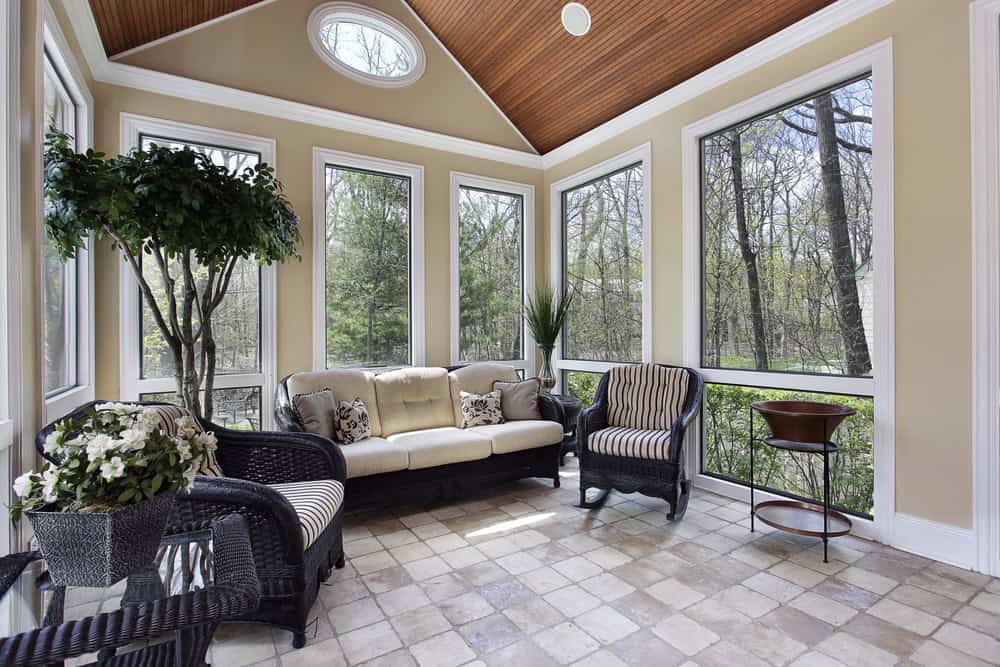
A three season sun room is an enclosed addition — typically attached to the back or side of your home — built to be used in spring, fall, and mild winter months. It’s not connected to your home’s HVAC system, and it’s not insulated the way your interior walls are. The structure usually features an aluminum or wood frame, large glass or screen panels, and a solid roof. It’s designed to let in light and air while keeping out bugs and rain.
In Harris County, where summer heat index values regularly push past 105°F and mosquito season runs from April through October, “three seasons” doesn’t always mean what buyers expect. The quality of the glass, the design of the ventilation, and the overall engineering of the room make an enormous difference in how many months you’ll actually want to spend in it.

Here’s the honest answer most contractors won’t give you: a standard three season patio room in Harris County is genuinely uncomfortable from roughly June through September. That’s four months where the room can feel like a solar oven, even with the windows open. You’re looking at about five to six months of real usability with a basic build — and that’s on the generous side.
That number changes significantly depending on how the room is built. The glass is the biggest variable. Single-pane or generic double-pane panels do very little to block solar heat gain, which means the afternoon sun heats the room fast and holds that heat well into the evening. We build with CONSERVAGLASS™ NXT, a proprietary energy-efficient glass that blocks UV rays and controls heat transfer — so the room stays cooler during the day and doesn’t trap heat the way a standard glass enclosure does.
Ventilation matters just as much. A room with well-placed operable windows and a ceiling fan can stay comfortable on a 90-degree morning in a way that a sealed glass box simply cannot. The orientation of the room on your home — whether it faces east, west, or south — also affects how much direct sun it absorbs during peak afternoon hours.
The point isn’t to oversell what a three season room can do in Harris County. It’s to be clear that the difference between a room you use eight months a year and one you abandon by Memorial Day comes down almost entirely to how it’s built and what materials went into it. Homeowners across Harris County — from Katy and Sugar Land to Kingwood and Pearland — have been making this investment for decades. The ones who end up happy are the ones who didn’t cut corners on the glass and ventilation from the start.
A four season deck or porch enclosure takes everything a three season room does and adds full insulation, climate control, and a connection to a dedicated heating and cooling source — usually a mini-split unit installed specifically for the room, so you’re not overloading your home’s existing HVAC system. The result is a room you can use on a 98-degree August afternoon or a 38-degree January night with equal comfort.
In Harris County, where winters are mild but summers are relentless, the math often favors the four season option more than buyers initially expect. Houston’s winters average lows around 44°F in January, with occasional cold snaps into the 20s — but those cold stretches are short. What’s not short is the heat. If you’re investing in a permanent addition to your home, the question worth asking is whether you want a room that works most of the year or one that works all of it.
The construction difference is meaningful. A four season enclosure requires proper wall insulation, thermally broken framing to prevent condensation, and a sealed building envelope that meets energy code requirements. In the City of Houston and unincorporated Harris County, any structural addition — including enclosed porch and deck conversions — requires a building permit. Projects with a total estimated cost over $50,000 also require a project number and accessibility review from the Texas Department of Licensing and Regulation (TDLR). We handle all of that — the permit application, the HOA deed restrictions declaration form, and the structural engineering — so you’re not navigating the Houston Permitting Center on your own.
For homeowners in established neighborhoods like Memorial, Bellaire, or West University Place, where HOAs and civic clubs have real architectural review processes, having a contractor who manages that paperwork isn’t just convenient — it’s the difference between a smooth project and a stalled one.
Want live answers?
Connect with a Four Seasons Sunrooms Houston expert for fast, friendly support.
The terminology in this category is genuinely confusing. “Season room,” “sunroom,” “patio enclosure,” “solarium” — these terms get used interchangeably by homeowners and contractors alike, and they don’t always mean the same thing. A season room is a broad category. A sunroom typically implies year-round climate control. A patio enclosure might be screened, glass-paneled, or fully insulated depending on who built it.
What matters more than the label is understanding what you’re actually getting and whether it fits how you live. A family in Cypress with young kids who want to eat dinner outside without fighting mosquitoes has different needs than someone in Clear Lake who wants a year-round home office with natural light. Both are valid — they just require different builds.
The construction gap between a 3 season patio and a 4 season patio is larger than most buyers realize going in. It’s not just a matter of adding a window unit. The framing, the glass, the roof system, the wall assembly, and the foundation requirements all change when you’re building for year-round climate control versus seasonal use.
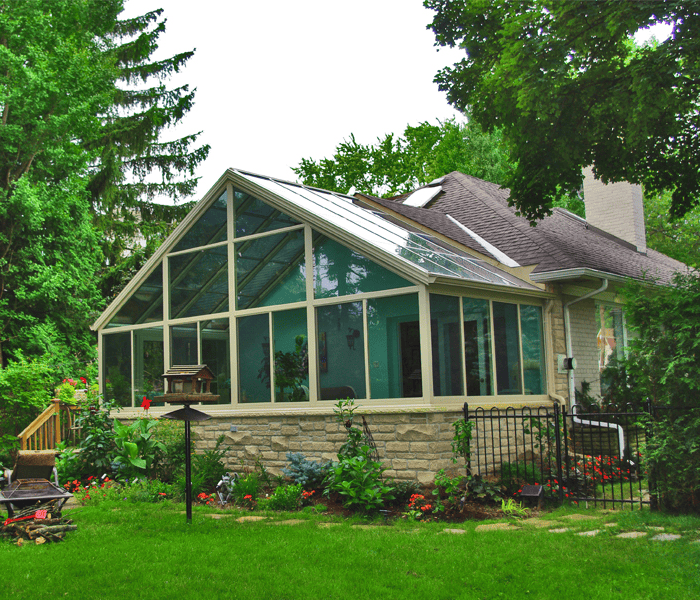
A 3 season patio is typically built with an aluminum frame, large operable glass or screen panels, and a roof that matches or complements the home. It’s lighter in construction, faster to install, and less expensive upfront. It’s a genuine improvement over an open patio — you get protection from rain, bugs, and wind, and you gain usable square footage for a good portion of the year. For homeowners in communities like Friendswood, Atascocita, or Spring who want to extend their outdoor season without a full room addition, a well-built three season room is a reasonable choice.
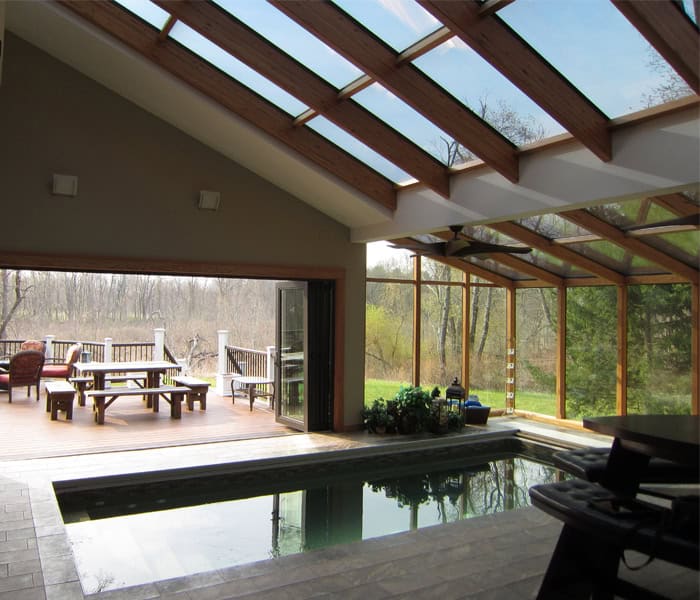
A 4 season patio room adds insulation in the walls and roof, thermally broken framing that prevents condensation from forming on the interior surfaces during Harris County’s humid summers, and a dedicated climate control system. The glass specification changes too — you need panels with a low solar heat gain coefficient (SHGC) to keep the room from overheating, and a low U-factor to hold conditioned air inside. This is where CONSERVAGLASS™ NXT earns its keep. It’s engineered to block UV rays and control heat transfer in a way that generic glass simply doesn’t, and in a climate like Houston’s, that difference is felt immediately.
Cost-wise, a four season room is a larger investment than a three season build. But the ROI data is worth knowing: three and four season sunrooms recover approximately 50% of their cost at resale, and in warm Southern climates where year-round usability is achievable, that number tends to run higher than the national average. A 400-square-foot addition can add $12,000 to $60,000 in property value depending on quality and finish level. That’s not a guarantee — but it’s a meaningful consideration when you’re weighing the cost difference between a three and four season build.
**Do I need a permit for a season room in Harris County, TX?**
Yes — and this is not something to skip. Any structural addition to a home in the City of Houston or unincorporated Harris County requires a building permit. If your project’s total estimated cost exceeds $50,000, it also triggers a review requirement from the Texas Department of Licensing and Regulation. Unpermitted work can result in fines that are often double the original permit cost, complications when you go to sell the home, and in some cases, a requirement to tear out the completed structure. We pull the permits, file the deed restrictions declaration form with the Houston Permitting Center, and handle the structural engineering — it’s part of every project we do, not an add-on.
**Will a three season sun room actually work in Houston’s heat, or will it just sit empty in summer?**
A standard, single-pane three season room will struggle from June through September in Harris County — that’s just the reality of building something uninsulated in a climate where heat index values regularly exceed 105°F. But a room built with the right glass, proper ventilation, and thoughtful orientation can be comfortable well into summer mornings and evenings, and throughout Houston’s mild winters. The key is the glass specification and how the ventilation is designed. We’ve been building in Harris County since 1975, and the difference between a room people actually use and one they avoid all summer is almost always in those details.
**How long does installation take compared to a traditional room addition?**
Significantly less. A conventional room addition in Harris County can take three to six months or longer, depending on permitting timelines and construction complexity. A season room or sunroom installation moves considerably faster — most projects are completed in a fraction of that time. That matters if you’re trying to have the room ready before mosquito season kicks in or before you list the home in spring.
**Can I convert an existing patio slab into a season room?**
In many cases, yes. Harris County’s suburban communities — Katy, Pearland, Humble, League City, Missouri City, and others — are full of homes with existing concrete patio slabs that are perfectly sized for an enclosure. Whether that slab can support a new structure depends on its condition, thickness, and how it was poured, which is something we assess during the design consultation. It’s one of the more common starting points for a season room project in this area.
Harris County’s climate is not going to cooperate with a room that wasn’t built for it. The good news is that a season room designed specifically for this region’s heat, humidity, and mosquito season — with the right glass, the right ventilation, and the right construction behind it — can genuinely become the most-used room in your home.
Whether you’re leaning toward a three season build to extend your spring and fall, or you want full year-round comfort with a four season enclosure, the decision comes down to how you live in your home and how long you plan to be there. Either way, the quality of the build matters more than the label on the product.
We’ve been doing this work since 1975. If you’re in Harris County and want a straight conversation about what makes sense for your home, reach out and we’ll start there.
Summary:
Article details:
Share: